





90-Day OBE-to-Adaptive Playbook for Board Programs (Free Template)
If you run licensure-bearing programs, you already know the stakes: feedback that lands in days (not weeks), evidence of mastery you can show to QA, and support that reaches struggling students early enough to matter.
This 90-day playbook walks you from OBE mapping to adaptive learning at scale, and includes a ready-to-use template you can paste into your rollout today.
Why move from OBE to adaptive, now?
Outcome-based education gave us a shared language (PLO/CLOs, rubrics, evidence). The bottlenecks that remain:
- Slow feedback that stalls learning
- Limited visibility into outcome-level gaps
- One-speed pacing that hurts licensure readiness
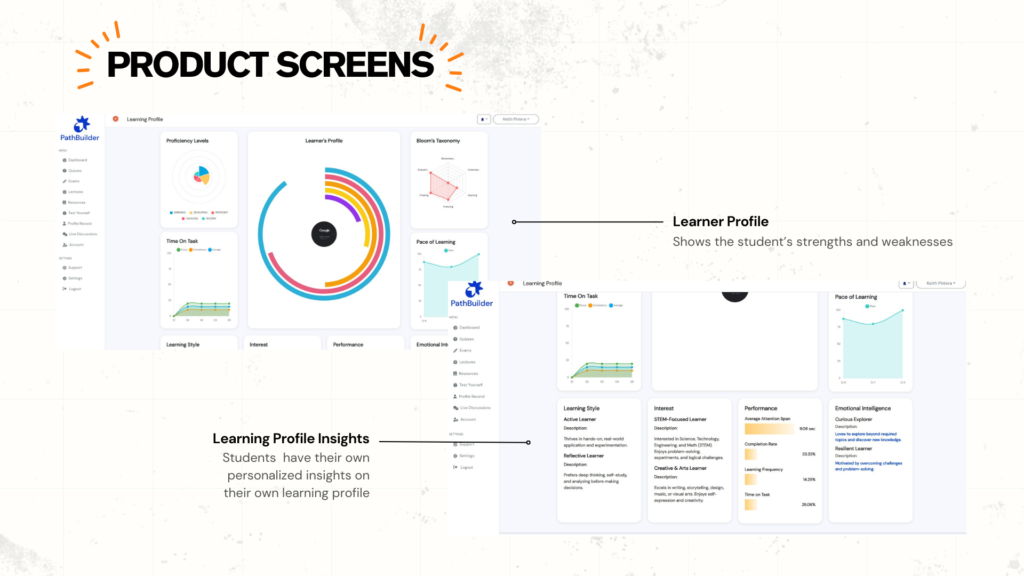
PathBuilder turns your OBE map into personalized practice, mastery signals, and timely human support without replacing educator judgment.
What “success” looks like in 90 days
- 30-50% faster feedback in Weeks 1-4
- Higher early engagement (attendance, pre-work, LMS activity)
- Mastery lift on board-linked outcomes, visible in dashboards
- At-risk recovery by Week 4
The 30-60-90 roadmap at a glance
Days 1-30: Launch clean and fast
- Map PLO/CLO → course outcomes → tasks → rubrics in PathBuilder
- Publish a student AI & integrity note (transparency = trust)
- Set nudge triggers (missed prep, inactivity, low confidence)
- Promise a feedback SLA (e.g., Labs 48h, Cases 72h) and meet it
Days 31-60: Iterate, then expand
- Add Weeks 5-8 with adaptive branches (remediate/enrich)
- Run a midterm mastery review (heatmaps by outcome)
- Share a two-page quick-wins brief for colleagues
Days 61-90: Prove impact and plan to scale
- Finalize Weeks 9-12 and summatives; pull pre/post comparisons
- Draft a scale plan (programs, enablement, costs) with IT & QA
- Package accreditation evidence (mappings, rubric logs, outcomes)
The engine: PathBuilder + your LMS
PathBuilder (your outcome-based education software) keeps OBE central while enabling mastery-based learning: outcome mapping, rubric-aligned tasks, advising triggers, and grade passback to Moodle/Canvas/Google Classroom.
Pair with FutureClassroom when you need HyFlex capture and participation logging.
Spreadsheets + LMS Only vs PathBuilder Stack
| Stack | Feedback SLA | Outcome Heatmaps | Early Alerts | Audit Trail |
| Spreadsheets + LMS only | Manual & inconsistent.Depends on instructor; hard to track across sections. | Limited. Course-level grades, but no outcome-level mastery across cohorts. | Basic. Attendance/grade triggers; difficult to combine signals (prep, rubric, activity). | Fragmented. Evidence scattered across files, LMS, and emails; hard to package for QA. |
| PathBuilder stack | Standardized & measurable. Rubric comment stems + SLA timers; program-level view. | Outcome-level heatmaps. PLO/CLO mastery by section, cohort, and licensure domain. | Signal fusion. Prep, rubric bands, quiz tags, and inactivity drive nudges & advisor tickets. | Click-to-audit. Outcome maps, rubric logs, item tags, and interventions packaged for QA. |
Result: With the PathBuilder stack, teams move from “best-effort” reporting to evidence you can defend, and improve week to week.
Copy-and-Paste 90-Day Playbook Template (Board Programs)
Paste this into your planning doc, LMS page, or team wiki.
1) Program & Team
- Program / Board Exam: _______________________________
- Term / Cohort: ______________________________________
- Pilot Sections (Course, Year, Section): ______________
- Dean / Program Chair (Owner): _______________________
- Faculty Leads: ______________________________________
- QA / Accreditation Lead: ____________________________
- IT / LMS Admin: _____________________________________
- Makarius / PathBuilder POC: _________________________
2) Goals & KPIs (set baselines before Day 1)
- Feedback turnaround (median hours): Baseline ____ → Target ____
- Early engagement (Week 1-4 composite): Baseline ____ → Target ____
- Mastery lift on licensure outcomes: Baseline ____ → Target ____
- On-time submissions (Weeks 1-4): Baseline ____ → Target ____
- At-risk recovery (on-track by Week 4): Baseline ____ → Target ____
- Faculty adoption & confidence (pulse): Baseline ____ → Target ____
3) Day 0 (Preparation – 1 week before start)
Objectives: Confirm scope, data, integrity guardrails.
Tasks
- Select lighthouse courses (licensure-critical)
- Export PLO/CLOs; map target outcomes in PathBuilder
- Load rosters; confirm LMS integration & grade passback
- Draft student-facing AI-use & integrity statement
- Create rubric bank (quiz, lab, case, OSCE/defense, etc.)
Outputs - Outcome map (PLO/CLO → course outcomes)
- Integrity/AI-use clause
- Rubric bank v1
- Baseline KPI sheet
4) Days 1-14 (Sprint 1: Course Build & Launch)
Objectives: Launch Week 1-2; ensure fast feedback.
Tasks
- Build Week 1-2 modules with formative checks & pacing
- Calibrate rubrics (faculty huddle); publish to LMS
- Configure early-warning signals (prep miss, inactivity, low mastery)
- Communicate feedback SLAs to students
Outputs
- Week 1-2 ready-to-run modules
- Rubric calibration notes
- Nudge triggers + advisor routing
Metrics to watch
- Feedback median hours (Week 1)
- On-time submissions
- Pre-class prep completion
5) Days 15-30 (Sprint 2: Iterate & Stabilize)
Objectives: Improve assessment quality; start advising loops.
Tasks
- Add Week 3-4 modules & question banks
- Run integrity spot-checks; refine disclosure prompts
- Launch advisor outreach for flagged students
- Hold office hours & micro-clinics (“bring-your-course” fixes)
Outputs
- Week 3-4 modules + item bank
- Integrity check report v1
- Advising contact log + playbook v1
Metrics to watch
- Early engagement (Week 1-4)
- At-risk recovery rate
- Rubric agreement (inter-rater consistency)
6) Days 31-60 (Sprint 3: Expand & Deepen)
Objectives: Scale to more sections; enhance adaptive pathways.
Tasks
- Add Week 5-8 modules with adaptive forks (remediate/enrich)
- Midterm mastery review with outcome heatmaps
- Publish “quick wins” brief for faculty
Outputs
- Week 5-8 modules + adaptive branches
- Outcome heatmap & midterm review
- Faculty quick-wins brief
Metrics to watch
- Mastery movement on licensure outcomes
- Feedback quality (student pulse)
- Faculty adoption rate
7) Days 61-90 (Sprint 4: Prove & Plan to Scale)
Objectives: Validate impact; set scale plan & budget.
Tasks
- Add Week 9-12 modules; finalize summatives
- Impact evaluation (pre/post, control if available)
- Draft scale plan (programs, enablement, costs)
- QA/accreditation packaging (evidence logs, mappings, reports)
Outputs
- Finalized modules & summatives
- Impact report (KPIs vs baseline)
- Scale plan & budget options
- QA/Accreditation packet
Metrics to show
- Feedback turnaround improvement
- Early engagement lift
- Mastery gains on board-linked outcomes
- Student recovery & pass indicators
8) Governance & Integrity Checklist
- Transparent AI-use guidelines for students & faculty
- Bias & privacy review of prompts and datasets
- Inter-rater reliability spot-checks (5-10%)
- Academic honesty workflow (flag → review → resolution)
- Data retention & access controls (role-based)
9) Roles & Cadence
Roles
- Dean/Chair — removes blockers; bi-weekly KPI review
- Faculty Lead(s) — course build, rubrics, feedback SLAs
- QA Lead — evidence logs; accreditation mapping
- Advising Lead — outreach; intervention documentation
- IT/LMS — integrations, rosters, SSO, grade passback
- Makarius POC — enablement, dashboards, impact review
Standing Meetings
- Weekly: 30-min huddle (metrics + blockers)
- Bi-weekly: KPI review & adjustments
- Day 90: Impact readout & scale decision
10) Notes & Links
- Links to resources, prompts, rubrics:
OBE → Adaptive “Translation” Table
Turn what you already have in OBE into adaptive behaviors that personalize learning and speed up recovery without losing educator judgment.
| OBE Artifact (input) | Adaptive Action (output) |
| Program Learning Outcomes (PLOs) | Define program-level mastery bands and end-of-term goals that roll up from course outcomes. |
| Course Learning Outcomes (CLOs) | Create course-level mastery rules (thresholds, weights) that drive dashboards and unlocks. |
| Performance Criteria | Map to rubric criteria that trigger targeted comments and next-step tasks. |
| Syllabus Modules / Topics | Build adaptive sequences (standard → remediate → enrich) based on mastery signals. |
| Task: Quiz (auto-scored) | Set branching to remediation items when score < threshold; otherwise move to enrichment. |
| Task: Problem Set / Case Study | Use rubric-aligned feedback assistants; if “Application” criterion < target, assign practice set B. |
| Task: Lab / Studio | Tie checkpoints to safety/quality rubrics; if missed, push pre-lab micro-lesson & recheck. |
| Rubric Criterion (e.g., Analysis) | Link criterion band (“Developing/Proficient”) to specific practice and faculty comment stems. |
| Item Bank / Question Tags | Route students to tag-level drills (e.g., Pharmacology Calculations, Diode Models). |
| Common Misconceptions List | Convert into auto-nudges with short refreshers and a 3–5 item confidence check. |
| Attendance / Participation Log | Trigger engagement nudges after X days inactivity; escalate to advisor after Y days. |
| Formative Check Schedule | Drive spaced review (1–3–7 day intervals) when a learner dips below mastery. |
| Licensure Blueprint Domains | Weight outcomes by board importance; surface domain-specific heatmaps for chairs. |
| Academic Integrity Policy | Insert disclosure prompts and spot-check cadence in the grading workflow. |
| Advising Playbooks | Turn routing rules into case tickets: self-help → faculty consult → advisor escalation. |
Your next move (15 minutes)
- Pick your lighthouse course
- Paste the template above into your plan
- Book a 30-minute PathBuilder walkthrough to see outcome heatmaps, adaptive branches, and nudge triggers live
Frequently Asked Questions
How is PathBuilder different from our LMS?
Your LMS is the content and gradebook hub. PathBuilder is outcome-based education software: it aligns PLO/CLOs to tasks and rubrics, tracks mastery-based learning, and turns signals into adaptive next steps and advising workflows.
Do we need to rebuild our courses from scratch?
No. Start with your existing OBE map, then add branching rules, nudges, and rubric-linked feedback. Most teams pilot with two sections of one licensure course.
Will AI replace instructor feedback?
No. PathBuilder uses rubric-aligned comment stems to draft consistent, high-quality feedback. Faculty approve and personalize every comment; human judgment stays in charge.
How fast can we see results?
Within the first 4 weeks, most teams see faster feedback, higher early engagement, and clearer course outcome tracking. By Day 90, you should have outcome heatmaps and an impact report versus baseline.
What about academic integrity with AI?
We use disclosure prompts, spot-checks, and policy-aligned guardrails. The system prevents “answer-generator” misuse by focusing on process feedback and criterion-level support.
Is PathBuilder an adaptive learning platform or an analytics tool?
Both. It uses your OBE structure to personalize practice and pacing while giving deans and chairs analytics they can act on (e.g., licensure-domain gaps).
How does it support board exam preparation?
Tie tasks and item tags to licensure blueprint domains. Weight outcomes by importance, then track mastery movement and assign targeted remediation well before review season.
Can we start mid-term?
Yes. Treat Sprint 1 as your baseline, then run Weeks 5–12 with adaptive branches and nudges. You’ll still capture a meaningful pre/post delta.
What data does PathBuilder store?
Course-relevant data only (outcomes, tasks, rubrics, submissions, mastery signals). Access is role-based; retention follows your policy. Grades pass back to the LMS.
How do we measure ROI?
Track feedback SLA hours, early engagement, mastery gains, and at-risk recovery by Week 4. Many teams also calculate faculty time saved per artifact and pass-rate lift on licensure-linked outcomes.










The PathBuilder team is a dynamic group of dedicated professionals passionate about transforming education through adaptive learning technology. With expertise spanning curriculum design, AI-driven personalization, and platform development, the team works tirelessly to create unique learning pathways tailored to every student’s needs. Their commitment to educational innovation and student success drives PathBuilder’s mission to redefine how people learn and grow in a rapidly changing world.